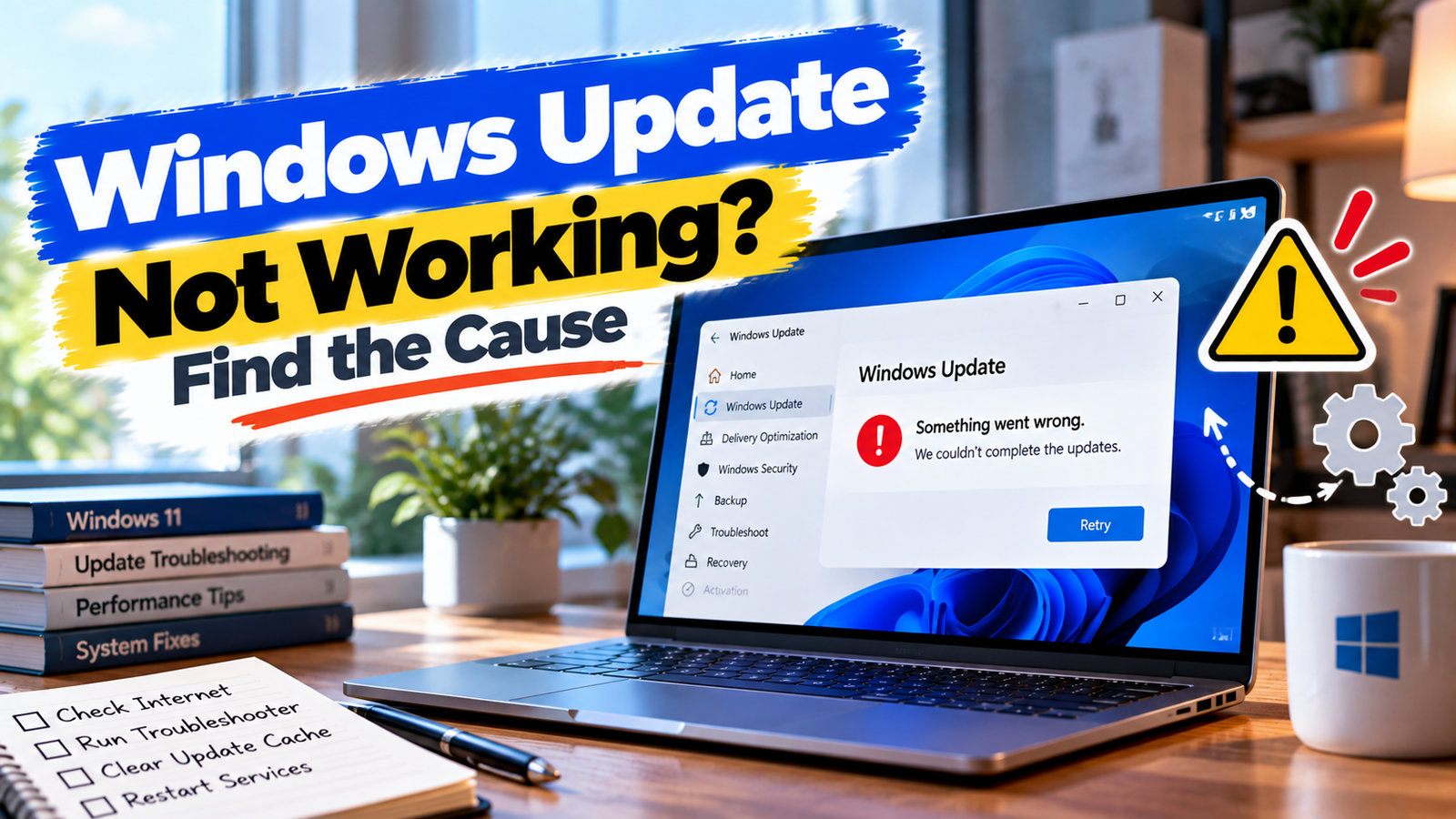
Windows Update Not Working? Find the Cause
If Windows Update Not Working, the problem can show up in several ways. Windows may refuse to check for updates, an update may download but fail to install, the progress may get stuck, or you may see an error code without much explanation.
The good news is that you don’t need to jump straight into advanced repair commands. Start by identifying where the update process is failing. A connection problem needs a different fix from a corrupted update cache or an update that repeatedly fails during installation.
Quick Diagnosis: Start Here
| What you’re seeing | Start here |
|---|---|
| Windows Update won’t check for updates | Go to Fix 1 |
| An update is stuck downloading | Go to Fix 2 |
| The update is stuck at a percentage | Go to Fix 3 |
| An update downloads but won’t install | Go to Fix 4 |
| You see an error code | Go to Fix 5 |
| The PC has very little free storage | Go to Fix 6 |
| Updates started failing after a recent change | Go to Fix 7 |
| Windows Update still won’t work | Go to Fix 8 |
Fix 1: Run the Windows Update Troubleshooter
Windows has a built-in troubleshooter specifically for update problems, so it’s worth trying before making manual changes.
On Windows 11, open the Get Help app and search for the Windows Update troubleshooter. Follow the prompts and let Windows check for problems.
You can also access Windows troubleshooters through:
Settings → System → Troubleshoot → Other troubleshooters
Find Windows Update and select Run if it is available there.
Let the troubleshooter complete its checks.
When it’s finished, restart the PC and go back to:
Settings → Windows Update
Select Check for updates and see whether the problem has cleared.
If the troubleshooter reports a problem it couldn’t fix, don’t keep running it repeatedly. Move on to the next checks.
Fix 2: Check Your Internet Connection
Windows Update needs a reliable internet connection to download update files.
Open a browser and make sure ordinary websites load normally.
If your connection is unstable, try:
- Reconnecting to Wi-Fi.
- Switching to Ethernet if available.
- Restarting your router.
- Disconnecting from a problematic VPN.
- Trying the update again once the connection is stable.
Also check whether other devices on the same network are having internet problems.
If everything else on the network works normally but Windows Update still fails, the connection may not be the main issue.
Keep the PC connected to power while updates are downloading or installing, particularly on a laptop.
Fix 3: Give a Stuck Update a Clean Restart
An update that appears stuck at 0%, 50%, 80% or 100% isn’t necessarily broken immediately.
Large updates can take time to download, process and install, particularly on slower PCs or slower connections.
If the percentage hasn’t changed for a long time and Windows isn’t making progress, restart the PC normally and check Windows Update again.
After restarting, go to:
Settings → Windows Update → Check for updates
Windows may resume the update or restart the process.
If the same update repeatedly stops at the same point, note the percentage and any error message. That pattern can help identify whether the problem is the download, installation or a system component.
Fix 4: Check Whether the Update Actually Downloaded
Sometimes Windows downloads an update successfully but fails when it tries to install it.
If you see a message such as “Install error”, check whether Windows provides an error code.
The code is useful because different failures can point toward different causes.
Before moving to advanced repairs, restart the PC and try the update again.
Also disconnect unnecessary external hardware such as:
- USB storage
- External hard drives
- Docks
- Other nonessential USB devices
Then try Windows Update again.
If the same update continues failing while everything else appears normal, continue with the cache and system-file checks below.
Fix 5: Look Up the Windows Update Error Code
If Windows gives you an error code, don’t ignore it.
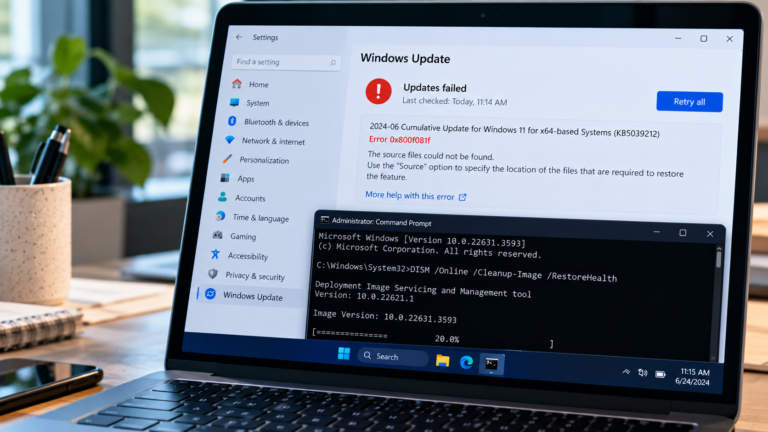
Codes such as 0x8007000d, 0x800f0922, 0x80240034, 0xC1900101 and others can indicate different underlying problems.
The error code can point toward issues involving:
- Corrupted update files
- Insufficient storage
- Driver conflicts
- Windows Update services
- Permissions
- Network problems
- Damaged system components
Write the code down before trying random fixes.
If the same code appears every time you attempt the update, treat that as a clue rather than repeatedly pressing Try again.
For common errors, Microsoft’s troubleshooting guidance often recommends checking the update service, storage, drivers or Windows system files depending on the specific code.
Fix 6: Free Up Space on the System Drive
Windows may fail to install an update if there isn’t enough free storage.
Open:
Settings → System → Storage
Check how much free space is available on your Windows drive.
If you’re running low, use Windows’ storage tools to remove unnecessary files.
Look through:
- Temporary files
- Recycle Bin
- Downloads
- Large unused files
- Applications you no longer need
Don’t manually delete files from Windows system folders simply to create space.
Once you’ve freed up enough room, restart the PC and try Windows Update again.
Storage requirements vary depending on the update and the type of installation, so there isn’t one universal amount of free space that guarantees every update will install.
Fix 7: Check What Changed Before the Problem Started
Think back to when Windows Update stopped working.
Did you recently:
- Install new hardware?
- Update a graphics or network driver?
- Install security software?
- Change network settings?
- Replace your router?
- Install another major application?
- Notice Windows becoming unstable?
The timing can be important.
Driver conflicts can interfere with some Windows updates, particularly when an update repeatedly fails during installation.
If the problem began immediately after adding hardware or changing a driver, check that hardware manufacturer’s current drivers and compatibility information.
If a third-party security program is involved, check whether it has an update available before considering more drastic changes.
Don’t start uninstalling random drivers just because an update failed. Identify the likely connection first.
Fix 8: Reset Windows Update Components
If the normal troubleshooting steps haven’t worked, corrupted or incomplete Windows Update files may be preventing the process from starting again correctly.
Windows stores temporary update data that can occasionally become damaged.
One common repair is to clear the Windows Update cache.
Before doing this, close your applications and make sure you’re comfortable working with Windows services and system folders.
Press Win + R, type:
services.msc
and press Enter.
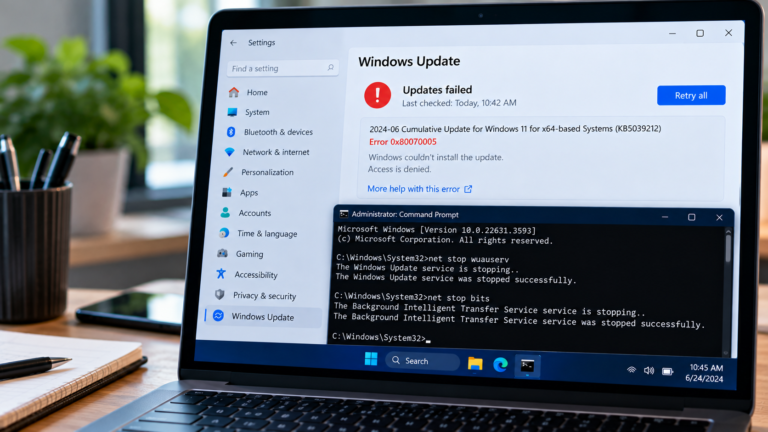
Find Windows Update, right-click it and select Stop.
Then open:
C:\Windows\SoftwareDistribution
Delete the contents inside the folder, not the folder itself.
Return to the Services window and start Windows Update again.
Restart the PC and check for updates.
If Windows Update is still failing, more advanced repairs involving system files may be appropriate. At that point, avoid randomly changing multiple services or deleting other Windows folders.
Why This Happens
Windows Update is more than a simple download.
Windows has to check for an available update, download the necessary files, verify them, prepare the installation and then apply the update without breaking the existing system.
A failure at any stage can produce a similar-looking message: Windows Update isn’t working.
That’s why the symptom matters.
If Windows can’t check for updates at all, look at the update service, connection and troubleshooter.
If the download is stuck, focus on connectivity and the update process.
If the update repeatedly downloads but won’t install, storage, drivers, corrupted update files or damaged system components become more likely.
How to Prevent Windows Update Problems
You can’t prevent every Windows Update error, but a few habits can make them less likely and easier to diagnose:
- Keep reasonable free space on your Windows drive.
- Don’t interrupt an update while Windows is installing it.
- Keep important personal files backed up.
- Keep device drivers reasonably up to date.
- Avoid installing questionable system-cleaning or optimization tools.
- Disconnect unnecessary external hardware if an update repeatedly fails.
- Note any error code instead of repeatedly retrying without investigating.
- Restart Windows when an update requires it.
Frequently Asked Questions
Why is Windows Update not working?
Windows Update can fail because of internet problems, insufficient storage, corrupted update files, driver conflicts, disabled services or damaged Windows system components.
Why is Windows Update stuck at 100%?
The update may still be processing even if the displayed percentage hasn’t changed. If it remains stuck for an unusually long time, restart the PC and check Windows Update again. If the same update repeatedly fails at the same point, investigate the associated error.
Why does Windows Update download but not install?
The downloaded files may be corrupted, the PC may not have enough storage, a driver or other software may be interfering, or Windows system components may need repair.
How do I fix a Windows Update error?
Start with the Windows Update troubleshooter, check your internet connection and available storage, restart the PC, and note the exact error code if one appears. The code can help identify the appropriate next step.
Should I delete the Windows Update cache?
Clearing the Windows Update cache can help when update files have become corrupted or incomplete. It should be done carefully by stopping the Windows Update service first.
Can low storage stop Windows Update?
Yes. Windows needs enough available space to download, prepare and install updates. If the system drive is nearly full, free up space before trying again.
What if Windows Update still doesn’t work after all these fixes?
If Windows Update continues failing, especially with the same error code, the problem may involve damaged system files, a driver conflict or another deeper Windows issue. At that point, use the error code to narrow down the cause rather than repeatedly retrying the update.