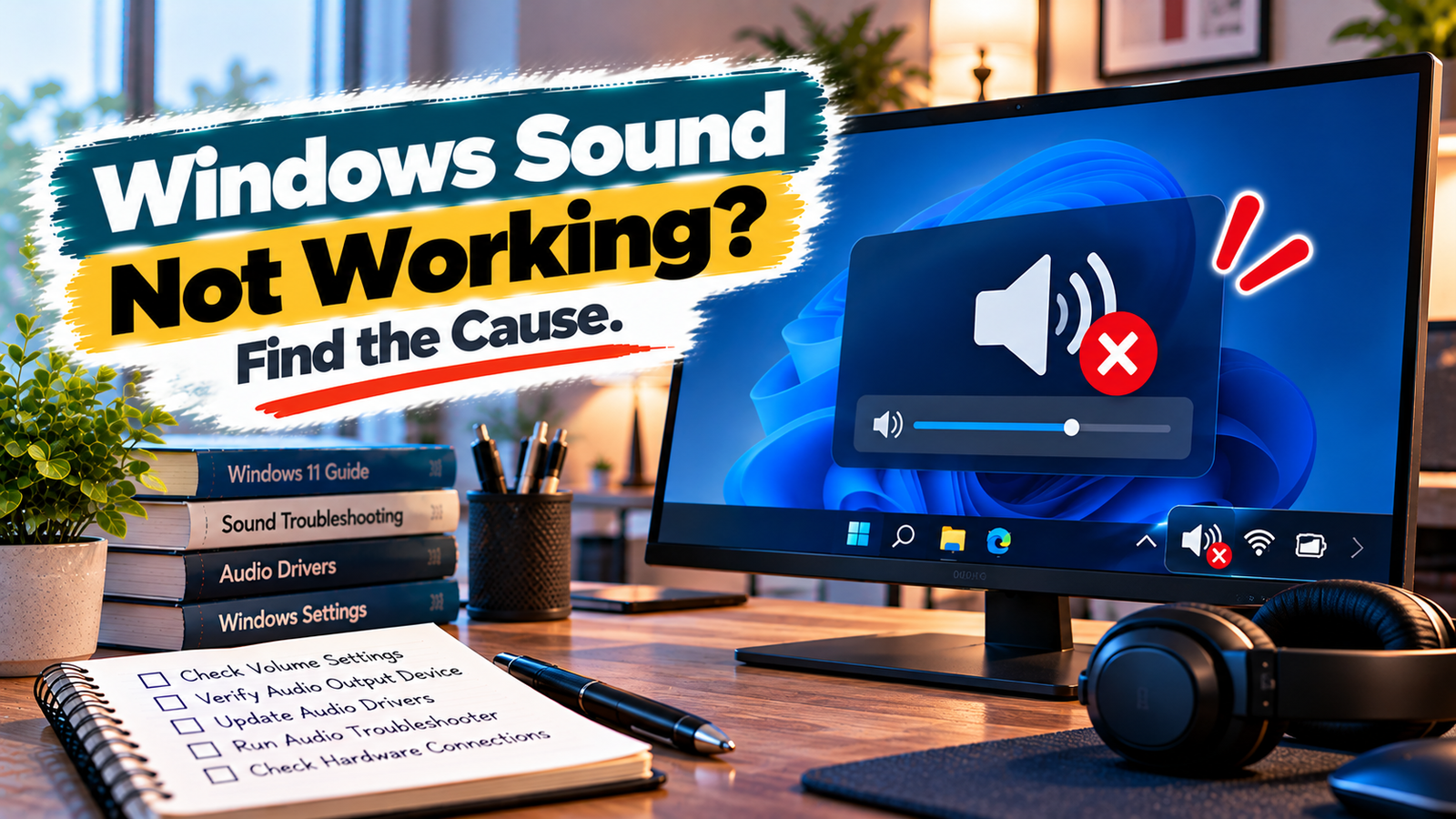
Windows Sound Not Working? Find the Cause
You press play, turn up the volume, and still hear nothing. When Windows sound stops working, the cause might be as simple as the wrong output device being selected—or something less obvious, such as a driver problem or an audio service that isn’t running properly.
The useful clue is whether sound has disappeared everywhere or only in one situation. If your speakers work but your headphones don’t, you can narrow the search considerably. The same applies when audio disappears after an update or stops working in just one application.
Quick Diagnosis: Windows Sound Not Working?
| What you’re seeing | Start here |
|---|---|
| There’s no sound from anything on the PC | Go to Fix 1 |
| Sound is coming from the wrong device | Go to Fix 2 |
| Headphones or Bluetooth audio aren’t working | Go to Fix 3 |
| Only one app has no sound | Go to Fix 4 |
| Sound stopped working after a Windows update | Go to Fix 5 |
| Audio still doesn’t work across Windows | Go to Fix 6 |
Fix 1: Check the Volume and Run the Audio Troubleshooter
Start with the obvious, but easy-to-miss, settings.
Select the speaker icon on the taskbar and make sure the volume isn’t muted or turned all the way down. If your keyboard has dedicated volume keys, check those too.
Next, play audio from a different source. For example, if a video has no sound, try a system notification or another application. This helps establish whether the problem is with one piece of content or Windows audio more generally.
If nothing produces sound, run the Windows audio troubleshooter. You can usually find the relevant option under Settings → System → Sound or through the Get Help app, depending on your Windows version.
Follow the suggested checks and test the audio again.
If the troubleshooter doesn’t identify the problem, don’t keep repeating it. The next step is to confirm where Windows is sending the sound.
Fix 2: Select the Correct Audio Output
Windows can send sound to a monitor, headset, speaker system or another connected device without making the change particularly obvious.
Open Settings → System → Sound and look under the output section.
Select the device you actually want to hear sound from. If you’re using speakers connected to your monitor, for example, Windows may be sending audio to a different output instead.
You can also check the volume mixer to make sure the selected output and application volumes are appropriate.
If the correct device isn’t listed, check whether it’s connected properly and recognised by Windows. For a monitor connected over HDMI or DisplayPort, confirm that the monitor supports audio and has its own volume turned up.
Once you’ve selected the intended output, play something again.
Fix 3: Troubleshoot Headphones and Bluetooth Audio
When speakers work but headphones don’t, focus on the connection rather than changing every Windows sound setting.
For wired headphones, check the connection and make sure the plug is fully inserted into the correct port. If possible, test the headphones with another device. That helps establish whether the headphones themselves are working.
For USB headsets, try another USB port.
Bluetooth audio needs a slightly different check. Make sure the headset is charged, switched on and connected to the PC. A device may appear in Windows even when the audio connection hasn’t been established correctly.
If the headset is connected but still silent, remove it from the Bluetooth device list and pair it again. Then return to Settings → System → Sound and select it as the output device.
If the headset fails with other devices too, the problem may be with the headset rather than Windows.
Fix 4: Check Whether the Problem Is Limited to One App
If system sounds and other applications work normally, there may be nothing wrong with Windows audio itself.
Open the affected application and look for its own volume, mute and audio-output settings. Some video-call tools, games and media players let you choose a separate output device.
You should also check the Windows volume mixer. Open Settings → System → Sound → Volume mixer and find the application. Make sure it isn’t muted and that its volume is turned up.
If the app uses a particular audio device, confirm that the device is still available.
Close and reopen the application after making changes. If sound works everywhere else but remains absent in that one program, investigate the application’s settings or updates before reinstalling audio drivers.
Fix 5: Investigate a Recent Windows or Driver Update
Did sound disappear just after Windows installed an update or you changed an audio driver? That timing is worth investigating.
First, restart the PC if you haven’t already. Then open Device Manager and expand Sound, video and game controllers.
Find your audio device, open its properties and check its status. If the problem began after a driver update, the Roll Back Driver option may be available.
If no rollback is available, check your PC or audio-device manufacturer’s support resources for a compatible driver. Avoid downloading drivers from unfamiliar websites.
You can also review Settings → Windows Update → Update history to identify recently installed updates.
Make one change at a time and test the sound afterward. That makes it easier to tell whether the change helped.
Fix 6: Check the Audio Device and Windows Audio Services
If Windows still produces no sound across applications, check whether the audio device is functioning properly.
In Device Manager, look for warning symbols beside the audio device. If the device is disabled, enable it. If Windows reports a driver problem, investigate the driver rather than assuming the speakers have failed.
You can also check the Windows audio services. Press Win + R, enter services.msc, and press Enter. Find Windows Audio and check that the service is running.
If it is stopped, start it if Windows allows you to do so. If the service is already running, restarting it may help with a temporary service problem.
If the audio device is missing entirely, the problem could involve a driver, firmware setting or hardware connection. A desktop with a separate sound card may need a hardware check; a laptop may require manufacturer-specific diagnostics.
If nothing restores audio, test with another known-working headset or speaker where possible. That final comparison can help distinguish a Windows problem from a faulty audio device.
Why This Happens
Windows sound depends on several things working together: the application, the selected output, the audio driver and the Windows audio services.
A problem at any one of those points can leave you with silence, but the symptoms usually offer a clue.
If every application is silent, start with the system output and audio device. If only one program has no sound, check its individual settings. If audio disappeared immediately after an update, investigate the driver or recent system change.
This is why reinstalling drivers should not be the first response to every sound problem. The right fix depends on where the audio chain is breaking down.
How to Prevent Windows Sound Problems
A few simple habits can make audio issues easier to avoid:
- Keep Windows and audio drivers reasonably up to date.
- Use drivers from your PC or device manufacturer’s official support resources.
- Check the selected output after connecting a monitor, headset or Bluetooth device.
- Avoid installing multiple audio-enhancement utilities unless you actually need them.
- If sound stops after an update, note the timing before changing other settings.
- Test headphones and speakers on another device when possible.
Frequently Asked Questions
Why is there no sound on my Windows PC even though the volume is up?
Windows may be sending audio to the wrong output device, an application may be muted, or the audio driver may not be working correctly. Check the selected output before moving on to driver troubleshooting.
Why does my PC have sound through speakers but not headphones?
The headphones may not be connected properly, Windows may be using another output, or the headset may have a connection or hardware problem. Test the headphones elsewhere and confirm the selected output in Windows.
Why did my sound stop working after a Windows update?
An update may have affected the audio driver or device configuration. Restart the PC, check Device Manager and investigate whether a compatible driver or rollback option is available.
Why does only one application have no sound?
The application may be muted in the Windows volume mixer or using a different output device. Check both its internal audio settings and its Windows volume settings.
Can a Windows update damage my speakers?
A software update is more likely to affect audio configuration or drivers than physically damage speakers. If several known-working output devices also fail, investigate Windows and its audio configuration first.
How do I know whether my audio device has failed?
Check whether Windows recognises the device, look for errors in Device Manager and test with another known-working headset or speaker. If the original device fails across multiple computers, a hardware fault becomes more likely.