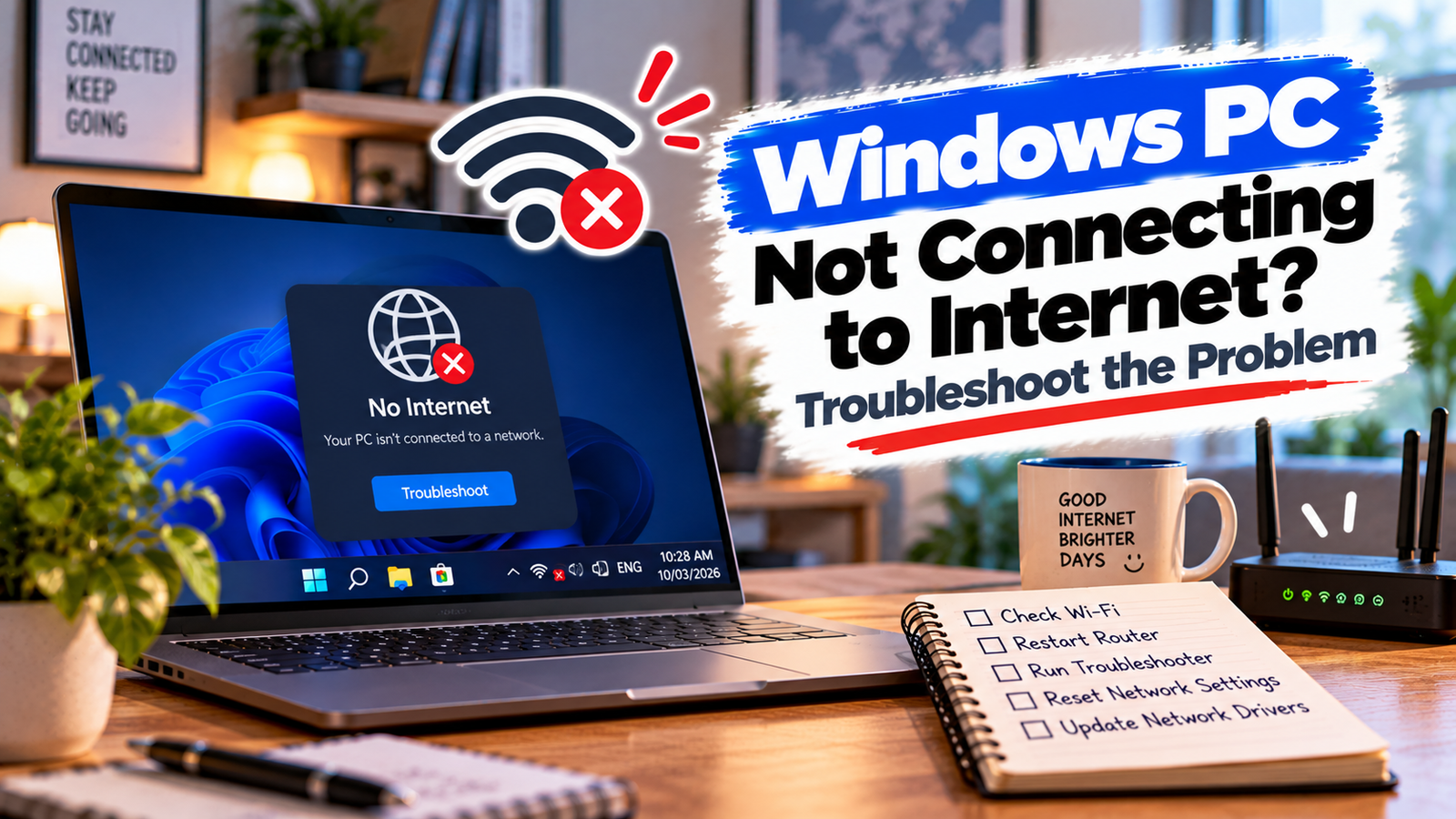
Windows PC Not Connecting to Internet? Troubleshoot the Problem
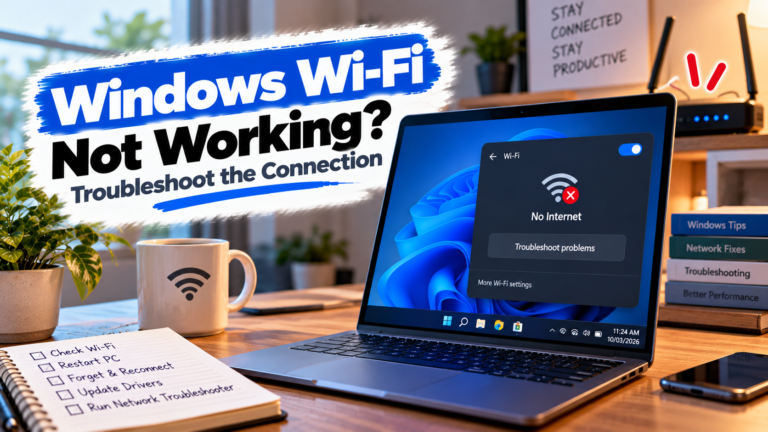
If your Windows PC Not Connecting to Internet, the problem isn’t necessarily with Wi-Fi. Your computer may be connected to your router but unable to reach the internet, or it may be failing to connect through Wi-Fi or Ethernet in the first place.
That distinction matters. If other devices can browse normally while your Windows PC cannot, focus on the PC. If every device on the network is offline, the router or internet service is a much stronger suspect.
Quick Diagnosis: Start Here
| What you’re seeing | Start here |
|---|---|
| Windows says there’s no network connection | Go to Fix 1 |
| Wi-Fi or Ethernet says connected but websites won’t open | Go to Fix 2 |
| Other devices also have no internet | Go to Fix 3 |
| Only your Windows PC is offline | Go to Fix 4 |
| Some websites work but others don’t | Go to Fix 5 |
| The connection keeps dropping | Go to Fix 6 |
| The problem started after a Windows or network change | Go to Fix 7 |
Fix 1: Check the Connection Windows Is Using
Start by looking at the network icon in the Windows taskbar.
Then open:
Settings → Network & internet
Check whether Windows shows an active Wi-Fi or Ethernet connection.
If you’re using Wi-Fi, make sure Wi-Fi is switched on and that your intended network is selected.
If you’re using Ethernet, make sure the cable is firmly connected at both ends.
If Windows doesn’t appear to detect either connection, the issue may involve your network adapter rather than your internet service.
Also check Airplane mode and make sure it is turned off.
If the PC connects to the network but still can’t reach websites, move on to the next check.
Fix 2: Find Out Whether You’re Connected to the Network but Not the Internet
This is one of the most important distinctions when troubleshooting internet problems.
Your PC can successfully connect to your home router while the router has no working internet connection.
Open a browser and try visiting a couple of different websites.
Then check another device using the same network.
If your phone or another computer also can’t access the internet, the problem probably isn’t specific to Windows.
If other devices work normally while your Windows PC doesn’t, continue troubleshooting the PC.
Don’t reset Windows network settings simply because the status says Connected, no internet. First establish whether the router or internet service is actually working.
Fix 3: Restart the Router and Check Other Devices
If several devices are offline, start with your network equipment.
Turn off the router and, if you have one, the modem or ONT supplied by your internet provider.
Wait briefly, then power the equipment back on.
Give the connection time to re-establish before testing your Windows PC again.
Also check the status lights on the equipment for anything unusual.
If phones, TVs and other computers all regain internet access after the restart, reconnect your Windows PC and test it.
If every device remains offline, the issue may be with your internet provider rather than Windows.
Fix 4: Restart the Windows PC and Reconnect
If the internet works on other devices, give the Windows PC a clean restart.
After Windows starts again, reconnect to your network.
For Wi-Fi, you can also forget the network and connect again:
Settings → Network & internet → Wi-Fi → Manage known networks
Select your network and choose Forget.
Then select the network again and enter the current password.
If you’re using Ethernet, disconnect the cable, wait a few seconds and reconnect it.
A temporary networking process or stale connection can sometimes prevent Windows from accessing the internet even though the network itself is working.
Fix 5: Check Whether the Problem Is DNS
If you’re connected to the network but certain websites won’t load, DNS may be involved.
DNS helps translate website names into the network addresses computers use to reach them.
One clue is that the internet connection appears active, but websites fail to load by name.
Before changing DNS settings manually, try a different website and restart the browser.
You can also test whether another browser has the same problem.
If multiple browsers fail while other internet-connected applications work, DNS or another network configuration issue becomes more plausible.
Avoid changing DNS servers simply because one website is slow. Establish that the problem is consistent first.
Fix 6: Check for an Unstable Connection
If your PC connects successfully but repeatedly loses internet access, look for a pattern.
Does it happen:
- Only over Wi-Fi?
- Only in one room?
- When the PC wakes from sleep?
- During large downloads?
- When using a VPN?
- At the same time as other devices lose connection?
If only the Windows PC disconnects, check its network adapter and drivers.
If every device disconnects together, investigate the router or internet service.
If the problem occurs only with Wi-Fi, compare it with an Ethernet connection if one is available. A stable Ethernet connection alongside unreliable Wi-Fi is a strong clue that the wireless side needs attention.
You don’t need to reset the entire network just because the connection drops occasionally.
Fix 7: Check What Changed Before the Problem Started
Think about what happened immediately before the internet stopped working.
Did you recently:
- Install a Windows update?
- Update a network driver?
- Change your router?
- Change your Wi-Fi password?
- Install a VPN?
- Install security software?
- Change network settings?
- Move from Wi-Fi to Ethernet or vice versa?
The timing can help narrow down the problem.
If the issue appeared immediately after a driver update, check Device Manager and the network adapter’s driver.
If you installed a VPN or security application just before the problem started, temporarily checking whether the problem persists without it can help identify the cause.
Don’t uninstall or change several things at once. Otherwise, it becomes difficult to know which change actually fixed the connection.
Why This Happens
An internet connection isn’t a single link.
Your Windows PC has to connect to a network adapter, communicate with the router, receive the appropriate network configuration and then reach the wider internet.
A problem anywhere along that path can look like the same thing: the internet isn’t working.
The simplest way to narrow it down is:
PC → Wi-Fi/Ethernet → Router → Internet service → Website
If the PC can’t connect to Wi-Fi or Ethernet, focus on the computer’s network connection.
If it connects to the router but has no internet, check the router and internet service.
If other devices work but the Windows PC doesn’t, investigate Windows’ network configuration, adapter, DNS or software.
How to Prevent Windows Internet Connection Problems
A few habits can make network problems easier to diagnose:
- Keep your network drivers reasonably up to date.
- Remember your current Wi-Fi password after changing it.
- Avoid unnecessary changes to router settings.
- Check other devices before assuming Windows is the problem.
- Keep your router firmware reasonably current.
- If you use a VPN, remember that it can affect network connectivity.
- Keep an Ethernet cable available when possible for troubleshooting Wi-Fi.
- Note the timing of Windows updates or driver changes when a connection problem begins.
Frequently Asked Questions
Why is my Windows PC connected to Wi-Fi but has no internet?
Your PC may be communicating with the router successfully while the router has lost its internet connection. Check another device on the same network to determine whether the problem affects the whole network.
Why does the internet work on my phone but not my Windows PC?
If other devices work normally, the internet service and router are probably functioning. Focus on the Windows PC’s network adapter, saved network configuration, DNS or software.
Should I restart my router if only my PC has no internet?
You can, but it’s more useful to first check whether other devices have internet. If every other device works, the router may not be the source of the problem.
Why can some websites open while others don’t?
This can happen because of DNS problems, browser issues, website-specific problems or network filtering. Try multiple websites and, if possible, another browser to see whether the problem is consistent.
Can a VPN stop Windows from accessing the internet?
Yes. VPN software changes how network traffic is routed and can occasionally cause connectivity problems. If the issue began after installing or changing a VPN, that timing is worth investigating.
Does restarting Windows fix internet problems?
It can. A restart clears temporary network processes and can restore a connection that became stuck. If the problem repeatedly returns, however, you should investigate the underlying cause.
What if Windows still has no internet after these checks?
If other devices work normally and the Windows PC remains offline, the next step is to investigate its network adapter, driver and network configuration more closely. A network reset may be appropriate if simpler troubleshooting hasn’t worked.