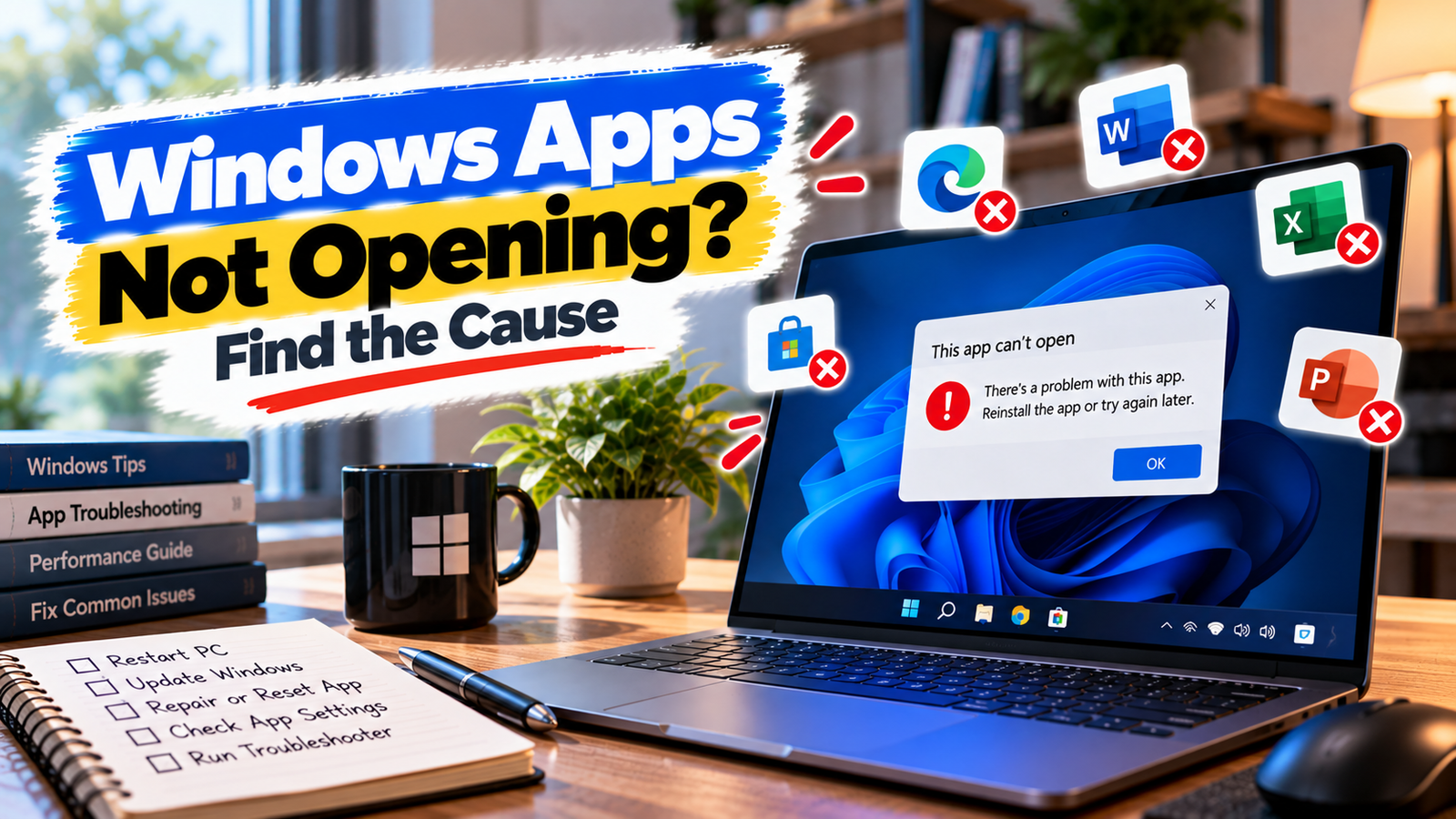
Windows Apps Not Opening? Find the Cause
If your Windows Apps Not Opening, the problem may be limited to one program or affect several apps across the system. An app might do nothing when you click it, open briefly and close, freeze on startup, or show an error before disappearing.
That difference matters. If only one application is affected, repairing or reinstalling that app may be enough. If several unrelated apps have stopped opening, the problem is more likely to involve Windows, system files, permissions, updates or another system-wide issue.
Quick Diagnosis: Start Here
| What you’re seeing | Start here |
|---|---|
| One specific app won’t open | Go to Fix 1 |
| The app opens and immediately closes | Go to Fix 2 |
| Several apps won’t open | Go to Fix 3 |
| Microsoft Store apps are affected | Go to Fix 4 |
| The problem started after a Windows update | Go to Fix 5 |
| The app works under another Windows account | Go to Fix 6 |
| Nothing has fixed the problem | Go to Fix 7 |
Fix 1: Restart the PC and Try the App Again
Before changing the app or Windows itself, restart the computer.
A program can fail to open because a background process has become stuck, an update hasn’t completed, or another process is holding a resource the application needs.
After restarting, try opening the affected app before launching everything else.
If it opens normally, the problem may have been temporary.
If the same app still refuses to start while other applications work normally, focus on that particular program.
Fix 2: Repair or Reset the Affected App
If only one app is refusing to open, Windows may be able to repair it without requiring a complete reinstall.
For supported apps, open:
Settings → Apps → Installed apps
Find the affected application, select its menu and open Advanced options if available.
You may see options such as:
- Terminate
- Repair
- Reset
Start with Repair.
This attempts to fix the application without removing its data.
If Repair doesn’t help, Reset may be available. Be aware that resetting an app can remove its local settings or stored app data.
Try opening the application again afterward.
If the app doesn’t provide these options, continue to the next step.
Fix 3: Check Whether Windows or Multiple Apps Are Affected
If several unrelated applications have stopped opening, don’t start reinstalling each one individually.
Try opening a few different programs.
For example, test:
- File Explorer
- Settings
- A browser
- Another desktop application
If only one application fails, the problem is probably application-specific.
If several unrelated programs fail in the same way, Windows itself may be involved.
Also check whether the computer has recently become unusually slow, frozen or unstable.
A broader system problem is more likely when multiple applications fail simultaneously.
Fix 4: Repair Microsoft Store Apps
If the problem mainly affects apps installed through the Microsoft Store, check the Store and app repair options.
First open the Microsoft Store and see whether it launches normally.
If it does, check for available updates for the affected app.
You can also use:
Settings → Apps → Installed apps
Select the affected Store app and look for Advanced options.
Use Repair first, followed by Reset if necessary.
If several Store apps are affected while ordinary desktop applications still work, the Store or Windows app framework may be involved rather than each individual app.
Fix 5: Check What Changed Before the Apps Stopped Opening
Think about when the problem began.
Did you recently:
- Install a Windows update?
- Upgrade Windows?
- Install another application?
- Update a driver?
- Change security software?
- Move or delete files used by the application?
- Run a system-cleaning utility?
The timing can provide a useful clue.
If the problem started immediately after a Windows update, check Settings → Windows Update for any pending updates or restart requirements.
If only one application stopped working after an update, check whether the developer has released a newer version.
Avoid immediately rolling back Windows or uninstalling updates unless there is a clear reason to connect the update with the problem.
Fix 6: Check Whether the Problem Is Limited to Your Windows Account
If an application refuses to open under your normal Windows account, but the same application works under another account, the problem may be related to your user profile.
You don’t need to move your files or change accounts permanently just to test this.
If another Windows account is available on the PC, sign into it and try launching the same application.
If it works there, the application itself is probably functional.
That points toward something specific to your normal account, such as application settings, permissions or user-profile data.
Don’t delete your Windows profile as a first response. There are less disruptive ways to investigate account-specific problems.
Fix 7: Reinstall the App or Repair Windows System Files
If the affected app still won’t open after repair and reset, reinstalling it may be the next sensible step.
Before uninstalling it, check whether the application stores important local files or settings that aren’t synchronized elsewhere.
Then uninstall the app, restart Windows and install a fresh copy from the official source.
If multiple unrelated apps continue failing, reinstalling each application isn’t the right approach.
At that point, Windows system files may need checking.
Open Windows Terminal or Command Prompt as an administrator and run:
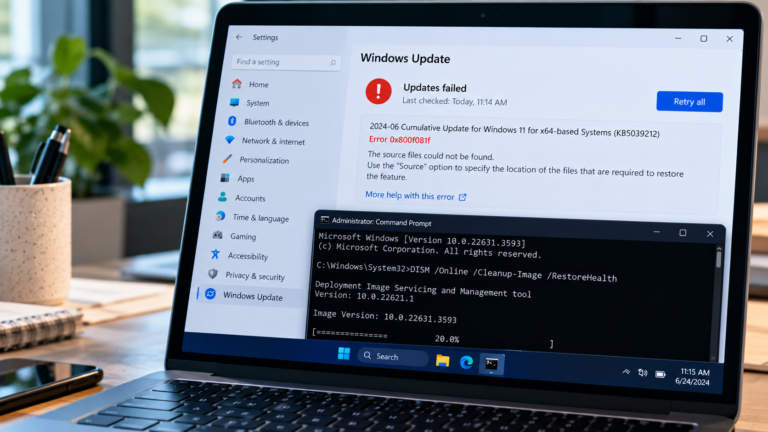
DISM.exe /Online /Cleanup-image /Restorehealth
After it completes, run:
sfc /scannow
These Windows tools can check for and repair certain problems with system components.
Restart the PC when the checks are complete and test the affected applications again.
If the problem began after a major system change and continues despite these checks, deeper Windows recovery options may be appropriate.
Why This Happens
An application that won’t open doesn’t necessarily mean the application is broken.
There are several layers involved:
Windows → User account → Application files → App settings → Supporting components
If only one program fails, corrupted app files or settings are plausible.
If Microsoft Store apps are affected together, the Windows app environment may be involved.
If several completely unrelated programs refuse to start, the problem may be with Windows itself.
That’s why reinstalling every affected application isn’t always the best first move. The number and type of apps affected is itself a diagnostic clue.
How to Prevent Windows App Problems
You can’t prevent every application failure, but a few habits can reduce the chances of problems:
- Keep Windows reasonably up to date.
- Keep important applications updated.
- Install software from reputable sources.
- Don’t delete application folders manually when uninstalling software.
- Avoid aggressive “system cleaner” tools that modify Windows files or settings.
- Keep important application data backed up.
- If an app suddenly stops working after an update, note the timing before making other changes.
Frequently Asked Questions
Why won’t an app open on Windows?
The app may have corrupted files or settings, a stuck background process, compatibility problems or a dependency on Windows components that isn’t working correctly.
Why does an app open and immediately close?
The application may be crashing during startup. Corrupted files, incompatible updates, damaged settings or missing supporting components can cause this behaviour.
Why won’t any of my Windows apps open?
If several unrelated apps are affected, the problem may be with Windows rather than the individual applications. Check whether Settings, File Explorer and other built-in programs also work.
Should I reinstall an app that won’t open?
Not immediately. If Windows offers Repair or Reset for the app, try those first. Reinstalling is more appropriate when the app remains broken after repair or its installation appears damaged.
Why are Microsoft Store apps not opening?
The affected app may need to be repaired or reset, or the problem may involve the Microsoft Store or Windows app framework. Check whether ordinary desktop applications work normally to narrow it down.
Why did my apps stop opening after a Windows update?
An update can sometimes expose compatibility or software problems. Check whether the application has an available update and whether other applications are affected before assuming Windows itself needs to be rolled back.
What if Windows apps still won’t open after reinstalling them?
If multiple unrelated apps continue failing, look beyond the applications themselves. Windows system files, user-profile problems or a broader system issue may need investigation.