Windows File Explorer Not Responding? Find the Cause
When Windows File Explorer Not Responding, folders may stop opening, windows can become stuck, or Explorer may freeze when you right-click, browse a particular location, or connect an external drive. The cause isn’t always Explorer itself.
A temporary Windows process issue can produce the same symptom as a damaged folder, a problematic external device, or an extension that interferes with Explorer. The quickest approach is to identify when Explorer freezes and what you were doing immediately before it happened.
Quick Diagnosis: Start Here
| What you’re seeing | Start here |
|---|---|
| Explorer has suddenly frozen | Go to Fix 1 |
| Explorer freezes whenever you open one particular folder | Go to Fix 2 |
| Explorer hangs when you connect a USB drive or other device | Go to Fix 3 |
| Explorer becomes slow or freezes when you right-click | Go to Fix 4 |
| Explorer keeps freezing or crashing across different folders | Go to Fix 5 |
Fix 1: Restart Windows File Explorer
If File Explorer has suddenly stopped responding, restart the Explorer process before making any deeper changes.
Press:
Ctrl + Shift + Esc
to open Task Manager.
Find Windows Explorer in the list of running processes. Select it and choose Restart.
Your taskbar and open File Explorer windows may disappear briefly while Windows restarts the process. This is normal.
Once Explorer returns, try opening the same folder again.
If the problem was caused by a temporary Explorer process failure, this may be enough to restore normal operation.
If Explorer freezes again when you perform a particular action, pay attention to what triggers it. That clue can point toward the actual cause.
Fix 2: Check Whether One Folder Is Causing the Freeze
Does Explorer work normally until you open one particular folder?
If so, don’t assume that the entire Windows installation is affected.
A folder containing a very large number of files, damaged files, unusual media, or content that Explorer is trying to preview can sometimes cause problems.
Try opening a few other folders.
If they work normally, the issue may be limited to that location.
You can also switch the folder to a simpler view and turn off the Preview pane if Explorer freezes while generating previews.
If the problem occurs only with one folder, consider whether the issue began after adding or downloading particular files there.
This distinction is important because repeatedly restarting Explorer won’t necessarily solve a problem caused by specific folder contents.
Fix 3: Disconnect External Devices and Test Explorer Again
If Explorer starts freezing after you connect a USB drive, external hard drive, memory card or another storage device, disconnect the device and test Explorer again.
If Explorer immediately becomes responsive, the external device deserves attention.
The problem could involve:
- A failing storage device
- A problematic USB connection
- A damaged file system
- A device that is taking too long to respond
Reconnect the device and see whether the behaviour returns.
If Explorer becomes unusable every time the same device is connected, avoid repeatedly opening files from it until you’ve checked the drive and, where necessary, backed up important data.
Fix 4: Check Whether Right-Click or Context Menus Trigger the Problem
Sometimes Explorer appears to be working normally until you right-click a file or folder.
If that’s when it freezes, the problem may be connected to something added to the Windows context menu by another application.
Think about software you installed or updated around the time the problem began, particularly utilities that add options to the right-click menu.
Test Explorer with different types of files and folders.
If right-clicking one particular file type causes the problem while other files work normally, that provides a useful clue.
You can also restart Windows and test again before making changes to installed applications. If the issue persists consistently, investigate recently installed software or utilities that integrate with File Explorer.
Fix 5: Check Windows for Broader System Problems
If Explorer keeps becoming unresponsive across different folders and there is no obvious external device or context-menu trigger, the problem may extend beyond File Explorer.
First, make sure Windows is up to date:
Settings → Windows Update
Install available updates and restart the PC if required.
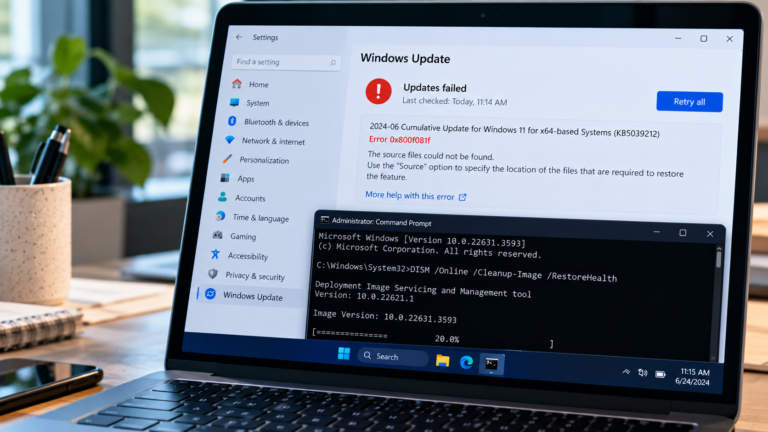
If the problem continues, Windows system files may need to be checked.
Open Windows Terminal or Command Prompt as an administrator and run:
DISM.exe /Online /Cleanup-image /Restorehealth
After it finishes, run:
sfc /scannow
These tools can identify and repair certain Windows component and system-file problems.
Restart the computer after the checks are complete and test File Explorer again.
If Explorer continues crashing or freezing across the system after these checks, the problem may require a deeper look at recently installed software, storage health, Windows configuration or the user profile.
Why This Happens
File Explorer is more than a window for browsing folders. It interacts with files, storage devices, previews, context-menu extensions, Windows services and other parts of the operating system.
That means the same “File Explorer not responding” message can have very different causes.
If Explorer freezes only when opening one folder, look at what’s inside that folder.
If it happens when an external drive is connected, investigate the device or connection.
If right-clicking triggers the problem, software integrated into Explorer becomes more suspicious.
And if Explorer freezes everywhere, a wider Windows or system-level problem is more likely.
How to Prevent Windows File Explorer Problems
A few simple habits can make Explorer problems easier to avoid and diagnose:
- Keep Windows and commonly used applications updated.
- Disconnect external storage properly when you’re finished using it.
- Keep important files backed up, particularly when working with older drives.
- Avoid installing unnecessary utilities that heavily modify Windows Explorer.
- Don’t ignore repeated freezing from the same external drive or folder.
- If a problem starts immediately after installing software, note the timing before making other system changes.
Frequently Asked Questions
Why does Windows File Explorer keep freezing?
Explorer can freeze because of a problematic folder, external storage device, context-menu extension, damaged system files or a temporary Windows process problem. The trigger often helps identify which area to investigate.
Why does File Explorer freeze when I open one folder?
That folder may contain a file or type of content that Explorer is struggling to process. Large folders, media previews and problematic files can sometimes cause Explorer to hang.
Why does File Explorer freeze when I right-click?
A third-party application may have added an extension to the Windows context menu. If the freeze consistently happens during right-click actions, recently installed or updated software is worth investigating.
Can a USB drive make File Explorer stop responding?
Yes. A damaged, failing or slow external storage device can cause Explorer to wait for the drive to respond. If the problem disappears when the device is disconnected, the drive or its connection should be investigated.
Will restarting Windows Explorer delete my files?
No. Restarting the Windows Explorer process does not delete your files. It simply reloads the Explorer interface and related process.
Should I reinstall Windows if File Explorer keeps freezing?
Not as a first step. Determine whether the problem is tied to a particular folder, external device, application or Windows system component before considering major recovery options.